Trying out 3D in the Web
- Web development , 3 d design
- December 2, 2024
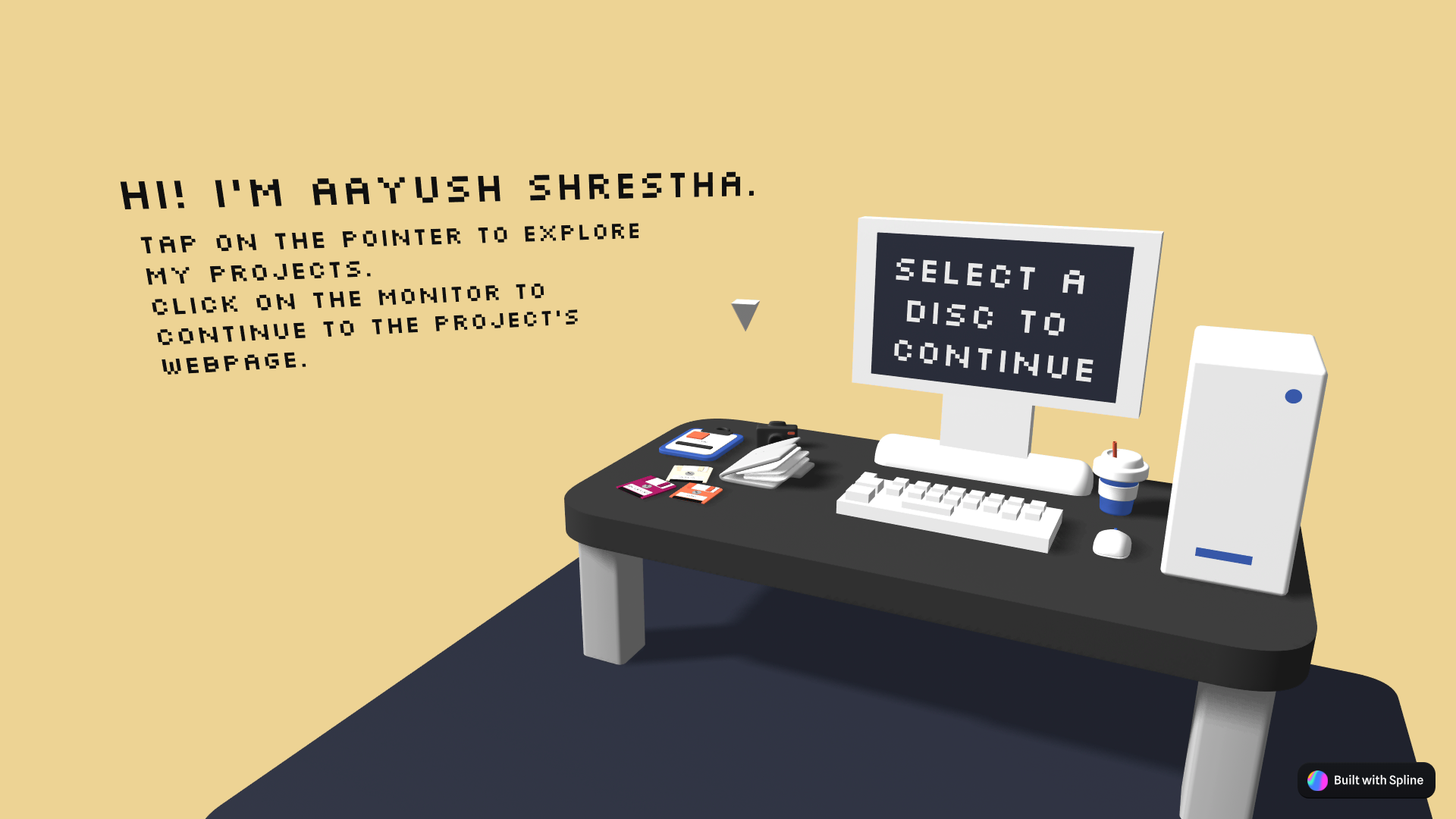
I wanted to try out 3D design for the web. I utilized Spline, a powerful tool that simplifies the process of creating and integrating 3D models into web applications.
Tried to make a website using Spline, you can check it out here.
The interface that Spline provides for 3D modeling is user-friendly, making it accessible even for those who may not have extensive experience in 3D design. It offers toolings that will be instantly familiar if you have used Blender.
It also allows for real-time collaboration, multiple file format export options, and direct embedding options into websites, making it really easy to get the model up and running on the web.
Warning
One of the major downsides I found was the lack of dependable performance, and the steep increase in load time and decrease in responsiveness as the complexity of the 3D model increases. Spline does provide warnings for high poly models and offers optimization tips, but performance is not up to the mark for complex models.
I will try out three.js next and see how it fares against Spline for web-based 3D models.